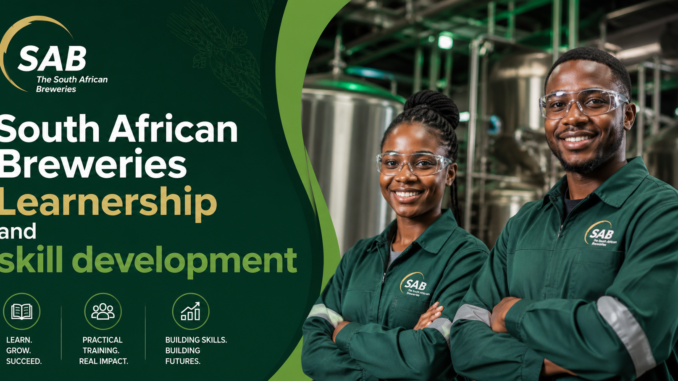
Details About the Learnership
South Africa’s youth unemployment crisis is not a new conversation. But what is often missing from that conversation is practical, reliable information about the real pathways available to young people who are ready to work, ready to learn, and simply need a structured opportunity to prove themselves. The SAB Learnership and Skill Development programme is one of those pathways and if you are serious about building a career, this post will give you everything you need to understand it.
What is it that you need to know about SAB Learnership?
South African Breweries, commonly known as SAB, is a subsidiary of AB InBev and one of the largest beverage companies on the African continent. Beyond its commercial operations, SAB has consistently invested in human capital development as part of its broader commitment to South Africa’s economic transformation goals. The SAB Learnership is a formal, registered programme that operates under South Africa’s Skills Development Act of 1998. This is an important distinction. A learnership is not a short workshop or a basic skills certificate it is a structured programme that leads to a qualification registered on the National Qualifications Framework (NQF). That means the qualification you earn is officially recognised across industries, not just within SAB itself. You are not simply being prepared to work for one company. You are building a credential that carries weight wherever your career takes you.
The programme combines theoretical classroom-based learning with real, practical workplace experience. Participants are placed within SAB’s operations and spend the duration of the learnership typically twelve months applying what they learn in a real professional environment.
Who Is This Learnership Programme Designed For?
The SAB Learnership targets unemployed South Africans, with a particular focus on youth. The typical eligibility requirements for this type of programme include the following:
- South African citizenship
- Between 18 and 35 years of age at the time of application
- A Grade 12 Matric certificate, with specific subject requirements depending on the stream
- Currently unemployed and not enrolled in any full-time academic programme
- Not having previously completed a formal learnership programme (in certain cycles)
- Ability to commit to the full twelve-month duration
Some specialised tracks within the learnership may require a diploma or degree in a relevant field, particularly for technical or business development streams. However, the core programme is designed to be accessible to those who hold a matric certificate, which makes it genuinely open to a large segment of South Africa’s unemployed youth population.
What Skills and Competencies Will You Develop?
This is where the SAB Learnership genuinely stands apart from a basic skills course. Participants are expected to engage actively, think critically, and take ownership of their own development. The skills you build will depend on which department or stream you are placed in, but the development is broad and transferable.
Technical and Operational Skills
Learners placed in production, logistics, or supply chain environments gain hands-on exposure to manufacturing processes, quality assurance, safety compliance, and operational efficiency. These competencies are valued across the entire fast-moving consumer goods (FMCG) sector, which means your skills travel well beyond SAB’s doors.
Commercial and Business Skills
Those placed in sales, marketing, or trade environments develop an understanding of market dynamics, customer relationship management, promotional strategy, and how a large commercial business drives revenue at the ground level. For anyone interested in a commercial career, this exposure is practically invaluable.
Workplace Readiness and Professional Conduct
Perhaps the most underrated part of any learnership is the development of soft skills the kind that many graduates lack simply because they have never worked in a professional environment before. Time management, workplace communication, problem-solving under pressure, collaboration, and professional accountability are all developed throughout the programme. These are the skills that shape long-term career success, not just first employment.
NQF-Registered Qualification
Upon successfully completing all requirements, participants receive a formally recognised qualification on the National Qualifications Framework. This is documented, verifiable evidence of your competence that any South African employer will recognise and respect.
How the Application Process Works and what to know before applying
SAB advertises its learnership opportunities through official channels, including its corporate website and trusted job platforms. Here is a general overview of how the process typically unfolds:
Step 1 — Watch for the Advertised Opportunity Learnerships open during specific application windows with firm closing dates. Missing the window means waiting for the next cycle, so staying informed is essential.
Step 2 — Submit Your Application Online Applicants complete an online application and attach required documents typically a certified copy of your ID, your Matric certificate, and proof of unemployment such as a UIF reference or statutory declaration.
Step 3 — Screening and Assessment Shortlisted candidates are invited to complete psychometric assessments or attend interviews to evaluate suitability, motivation, and potential fit within the programme.
Step 4 — Placement and Onboarding Successful applicants are placed in a relevant department and begin their structured twelve-month learnership, combining formal training sessions with practical daily tasks.
Step 5 — Completion and Certification Learners who meet all programme requirements receive their NQF-recognised qualification along with a portfolio of evidence that demonstrates their workplace competence.
Tips to know in order to improve your Application
Competition for SAB learnership spots is intense. These practical steps can genuinely improve your chances:
- Apply as early as possible do not wait until the closing date
- Ensure all documents are certified and clearly legible before uploading
- Write a focused, honest motivation that explains why this specific opportunity matters to you
- Research SAB and AB InBev before any interview showing that you understand the business signals genuine commitment
- Double-check that your contact details are correct so you do not miss a callback
- If you are not selected in one cycle, do not give up many successful learners applied more than once
Frequently Asked Questions and answers
1. Does completing the SAB Learnership guarantee permanent employment?
No. Completing the programme does not automatically guarantee a permanent position at SAB. However, learners who perform exceptionally well may be considered for future opportunities when positions become available. More importantly, the qualification and workplace experience you gain can significantly improve your employability across South Africa’s FMCG, manufacturing, logistics, and business sectors.
2. Is the SAB Learnership paid?
Most SAB learnership programmes provide participants with a monthly stipend to help cover basic expenses such as transport and meals. The amount may vary depending on the specific programme, location, and intake cycle. Always verify payment information on the official vacancy advertisement.
3. Can I apply if I only have a Matric certificate?
Yes. Many SAB learnership streams are designed for candidates who have completed Grade 12. However, some specialised opportunities may require additional qualifications such as a diploma, certificate, or degree depending on the department.
4. Can I apply if I am currently studying at a university or TVET college?
Generally, these programmes target unemployed individuals who are not enrolled in full-time studies. Requirements may vary from one intake to another, so always check the official eligibility criteria before submitting your application.
5. How competitive is the SAB Learnership Programme?
Competition can be extremely high because SAB is one of South Africa’s most recognised employers. Thousands of young people may apply for a limited number of positions. Submitting a complete application, applying early, and carefully following instructions can improve your chances.
6. What happens if my application is unsuccessful?
Do not view a rejection as a failure. Many successful candidates apply multiple times before being selected. Continue building your skills, improving your CV, and applying for future opportunities as they become available.
7. Will I receive a certificate after completing the programme?
Yes. Learners who successfully complete all assessments, workplace requirements, and programme outcomes receive an NQF-recognised qualification and supporting evidence of their practical workplace experience.
8. Where will I be placed during the learnership?
Placements depend on business needs and the available programme stream. Learners may gain experience in manufacturing, packaging, logistics, supply chain operations, sales, marketing, administration, or other business functions.
9. What mistakes should applicants avoid?
Some of the most common mistakes include:
- Applying after the closing date
- Uploading unclear or uncertified documents
- Providing incorrect contact details
- Applying without reading the minimum requirements
- Using a generic motivation letter for every application
Paying attention to these small details can make a significant difference.
10. How can I stay informed about future SAB opportunities?
The safest approach is to regularly monitor SAB’s official careers channels and reputable opportunity platforms. Be cautious of social media posts asking for application fees or requesting personal banking information, as legitimate employers do not charge candidates to apply.
Why This Opportunity Is Worth Your Full Effort
South Africa does not need more awareness of unemployment. It needs more structured pathways that convert potential into professional participation. The SAB Learnership does exactly that. It places a motivated young person inside a world-class business, develops them deliberately, and delivers a qualification that compounds in value across an entire career. If you are ready to commit, ready to learn, and ready to show what you are capable of this programme deserves your best application.
Please note: This website is an independent information platform. We share publicly available information about learnerships, internships, and job opportunities across South Africa. We are not affiliated with SAB or AB InBev, and we do not process applications or make any hiring decisions. All applications must be submitted directly through official SAB channels. For any questions about information on this site, please visit our Contact Us page. Your privacy matters to us read how we handle your data on our Privacy Policy page.

Leave a Reply